
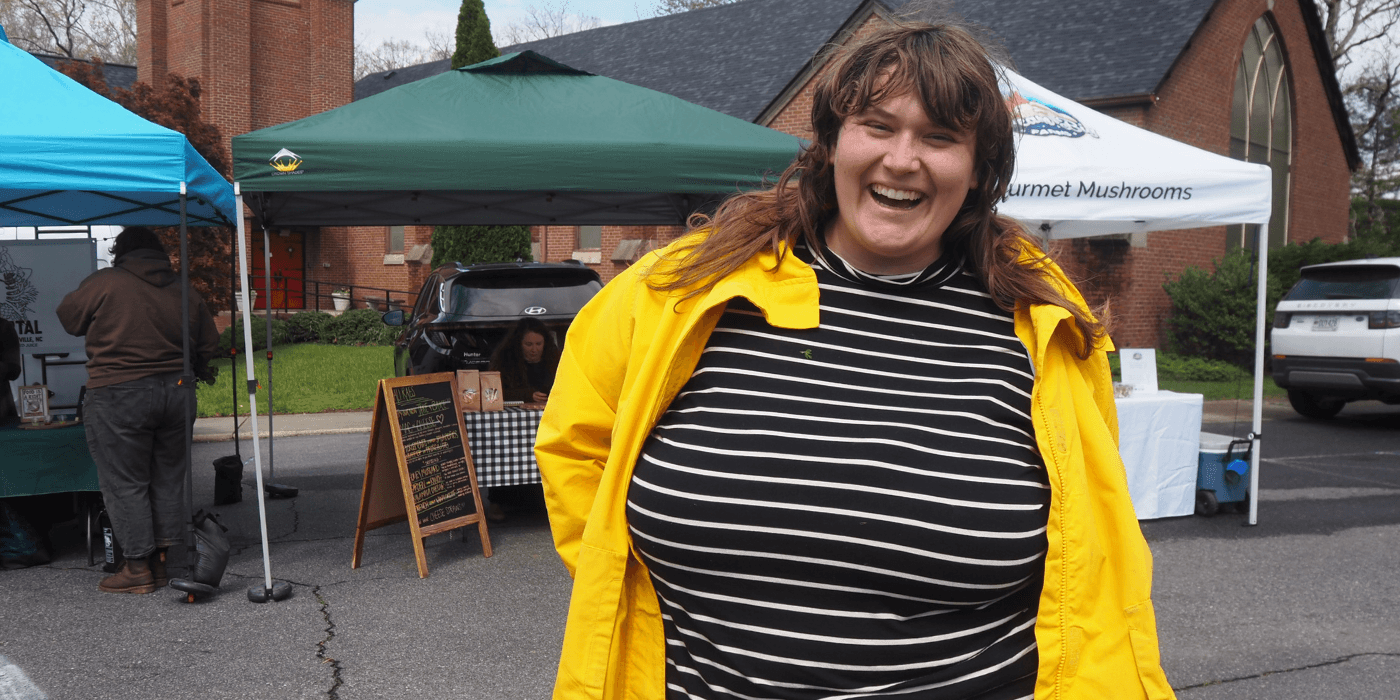
Anna Zurliene is the Executive Director of the East Asheville Tailgate Market (Fridays, 3-6 p.m.) and a big supporter of local food systems and community food security. Since her start as director in 2023, Anna has stewarded the gathering of vendors and customers alike to strengthen investment in local foods and more. Anna loves to cook for herself and others and loves finding fresh ingredients at markets.
What are you most looking forward to this season at East Asheville Tailgate Market?
After some recovery from Helene, I am looking forward to a fresh season coming out of a disaster zone and centering the market community in a calmer way. I’m really looking forward to our new vendors and a really solid base of returning vendors—it’s going to be a really sweet combination. Much of the feedback we get from our vendors at the end of the year is that they really enjoy the small neighborhood community vibe where customers can come and feel relaxed and really engage with their growers and makers. I’m looking forward to overhearing those conversations again.
What are some of your favorite in-season products at the market right now? Do you have go-to recipes for this time of year?
I love Wild Goods ramp butter and now is the season for ramps! I love having just that on a piece of toast from High Top Bread Co. I also like making roasted carrots with a carrot top pesto or gremolata. I have been really into roasted beets with goat cheese, pumpkin seeds, and a vinaigrette, too.
Are there any new vendors this season?
We will have goat cheese from Round Mountain Creamery, pastries from Back Porch Baking Co., tamales and more from La Gringa Tamalera. We have some new homesteaders that are coming with more specialized, small-batch products like Plucky Sparrow Homestead with their granola and sprouted beans. We’ll also have a new hot food vendor, Pizza Finta, who will have vegan pizza available during market. We have added a flower farmer too—Sari’s Garden Flowers.
How have you seen programs like ASAP’s Double SNAP for Fruits and Vegetables and Farm Fresh Produce Prescription impact the market community?
Especially after the hurricane, the number of people getting Disaster SNAP who found out about Double SNAP—it was a game changer for them especially while we were in that unknown space. People were really inspired by that extra help with SNAP. A lot of folks hadn’t known about the program before, so it strengthened education around that too. We have a lot of people who come regularly, so creating a regular customer base is really important. Being able to do that across a wider demographic of people who may not think to come to the farmers market—it has been expanding our community and our ability to reach people. SNAP customers are the customers I interact with the most, and in terms of feedback and engagement, those are the people who are informing the shape of the market.
What are some of your challenges in managing a farmers market?
Convincing people that shopping locally and at farmers markets is a choice that they can make. It can be convenient and it can work for you if you choose that and make it a part of your life and weekly routine. The convenience of a grocery store is there, and people have a lot of time and money constraints in their lives, but we are trying to show how markets can be an option for shopping local. We want to show people, beyond the words, that this is an important economy and part of our community too.
We worked to address that in the past by teaming up with ASAP and other weekday markets (West Asheville and River Arts District markets) with the passport program. If folks visited one of these three weekday markets a certain number of times per month then they would get a co-branded tote bag in hopes that this would help build people’s routines and that they would shop at markets even without a prize.
Why is shopping at farmers markets important to you?
Well for one, the eggs you get at market are about the same price as the grocery store right now so might as well buy local, and same goes for a lot of other foods. Growers have a lot more autonomy and control over their products and pricing than what’s available at grocery stores. Supporting local—especially as tourism is down—we have to be the ones to support our community right now. The food is so much more vibrant and fresh. You can find a lot more specialized foods that you may not expect to find in a grocery store. It’s also a chance to continue to form connections with people in our community, whether that’s other customers or growers. It’s a resource hub for information on what’s going on in our community.