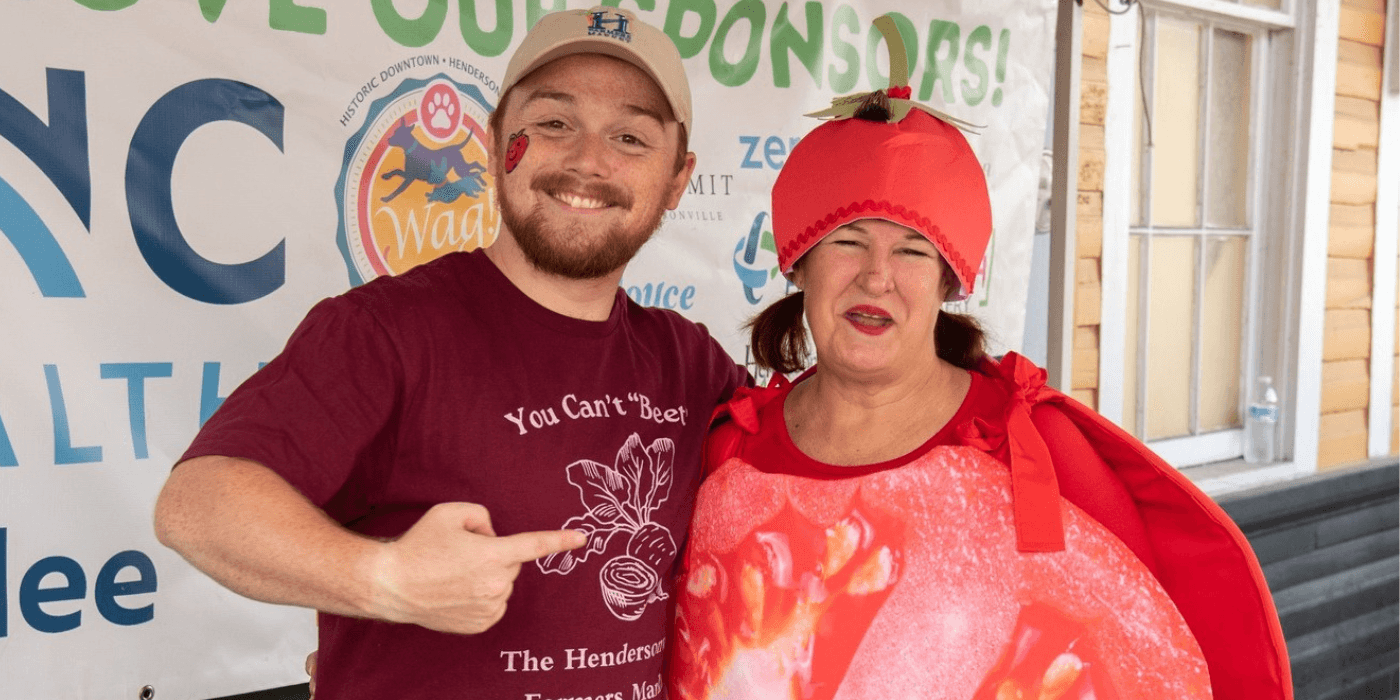
Born and raised in Western North Carolina, Dakota Parker (pictured on left) serves as the Downtown Event Coordinator for the City of Hendersonville, as well as the Market Manager for Hendersonville Farmers Market (HFM). Dakota didn’t come into this role with much experience or knowledge of farmers markets or local agriculture four years ago, but he has gained many skills and fallen in love with the community he has built at the market. HFM is set to reopen for the season on Saturday, May 2, 8 a.m. to 1 p.m.
What are your hopes and dreams for this season?
My hopes and dreams are the same every year: to create a space where everyone wants to be—and where everyone leaves having had a great experience. I like to say, “If the market doesn’t work for everyone, then it doesn’t work for anyone.”
I believe a successful market is made up of vendors, customers, local businesses, community sponsors, and everyone else who has the chance to be positively impacted by our mission. It should always be that way.
This year, we’re adding special programming in collaboration with businesses in the 7th Avenue District to help spread the love throughout our community. This is an exciting opportunity for us to grow alongside our neighbors and strengthen our partnerships even more.

Are there any new vendors this season or products you’re looking forward to having again?
We do have a few new vendors this year that I’m really excited about! One of them is Wag Valley Farms, which has been around for about five years now. We had the chance to do a farm tour with them, and it was mind-blowing to see how much love and care goes into everything they do. They’re family-owned and operated, and I’m really looking forward to having them join us for the 2026 season.
It’s always hard to pick just one product to look forward to at our market. One of my favorite things to do is make what I call a “Farmers Market BLT.” I can get everything right at the market, from the veggies to the bread, and even the bacon. There’s nothing better than how fresh it all is, and it makes for one of the best summer lunches you can have.
How have you seen HFM’s Double SNAP program and ASAP’s Farm Fresh Produce Prescription program impact the market community?
Our market is a proud participant in Double SNAP and ASAP’s Farm Fresh Produce Prescription Program. HFM has partnered with ASAP on these initiatives for years, and when changes were made to the Double SNAP program due to grant funding, we took a close look at our budget to see how we could continue offering a full dollar-for-dollar match. Thanks to the incredible support of our many amazing sponsors, especially our presenting sponsor and longtime champion of the market, UNC Health Pardee, we’re able to continue offering Double SNAP with no cap.
With the addition of the Prescription Program, even more members of our community have access to fresh, locally grown food that they might not otherwise be able to afford. It also provides a meaningful economic boost for our vendors. This support has made a real impact: some of our farmers have been able to transition to full-time operations, and three of our vendors have even gone on to open brick-and-mortar locations after growing their businesses at the market.
What are the best and hardest parts about operating a farmers market?
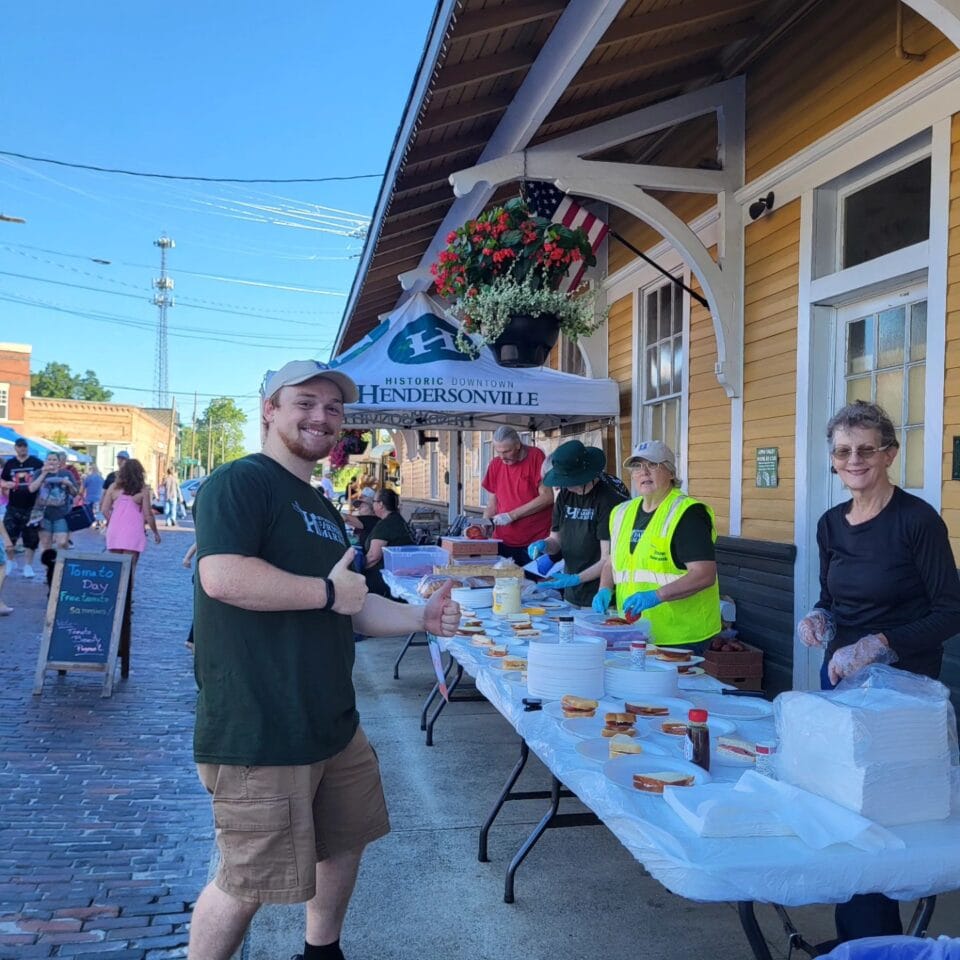
The best part is the community. We’re incredibly lucky to provide a space that people are genuinely excited to come to. Our vendors are one of a kind, some of the best people I’ve ever met, and they’re just as passionate about the market as I am.
Our loyal regulars are the backbone of the market. They always take the time to say hello or stop and chat, and that means a lot. Our sponsors are also amazing; they love attending the market and seeing the smiles on people’s faces while enjoying something they help support. And for first-time visitors, we’ve heard from so many people who came to Hendersonville and stopped by the market, had such a great experience, and now make it a point to come back at least once a year.
The hardest part of running the market is probably the communication side of things. When you’re working with 75+ vendors, making sure everyone has the right information, is following guidelines, and knowing where they need to be can get complicated at times. I’ve improved my organization skills over the years, though things can still occasionally slip through the cracks. Thankfully, my vendors are very patient with me, and I try to be flexible with them, so it all balances out in the end.
Why is shopping at farmers markets important?
Supporting local! Small businesses and local farmers are the pillars of any strong community. When you shop local, you’re investing directly into your community. You’re showing that you care about the quality of goods and the success of businesses in your area. Farmers markets support the livelihoods of vendors, provide access to fresh and local food, and help strengthen the local economy. They bring people together and create a sense of connection that you just can’t replicate elsewhere.
Now more than ever, small businesses and local agriculture need our support. As large corporations continue to grow, it becomes more challenging for local businesses to compete and thrive. If we care about the future of our communities, choosing to shop local is one of the most impactful things we can do.
I also understand that not everyone can always afford to shop local, and that’s okay. There are still ways to support your community. Find a market that fits your needs, especially one that offers programs to help make local food more accessible. Every market is unique, and it’s important to find one that works for you.