
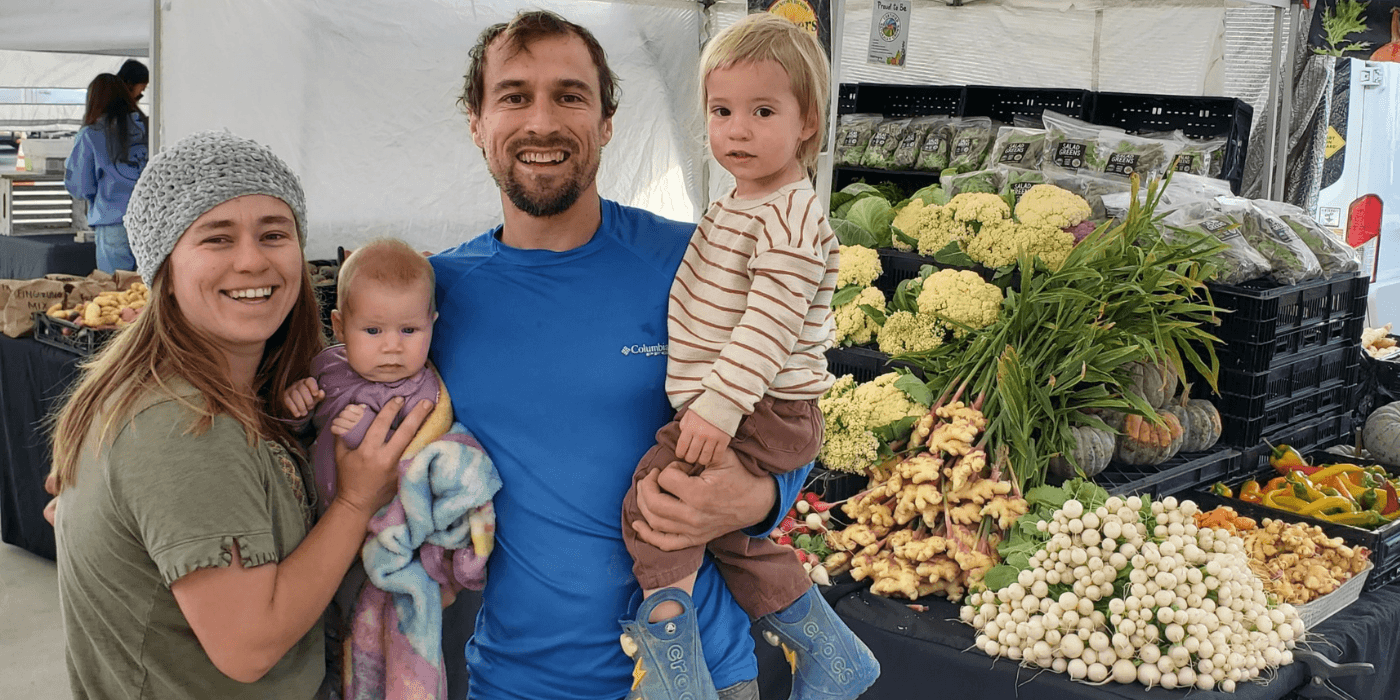
In 2020 at the start of COVID-19, Mike and Sara Hedge of Hedge Family Farm put their grand road trip on hold to start farming in Happy Valley, North Carolina. With the help of an incubator farm at the Patterson School Foundation and program support from ASAP, Hedge Family Farm is thriving in their sixth year. In addition to growing a variety of no spray, Certified Naturally Grown produce, they are also close to reaching their dream of planting 10,000 fruiting trees like apples, pawpaws, figs, and persimmons. Find Hedge Family Farm at the Hickory Farmers Market every Saturday along with their products in restaurants in the High Country, Morganton, and Hickory.
To view a condensed video version of this interview, go to ASAP’s Instagram or Facebook.
Tell us more about the beginnings of Hedge Family Farm.
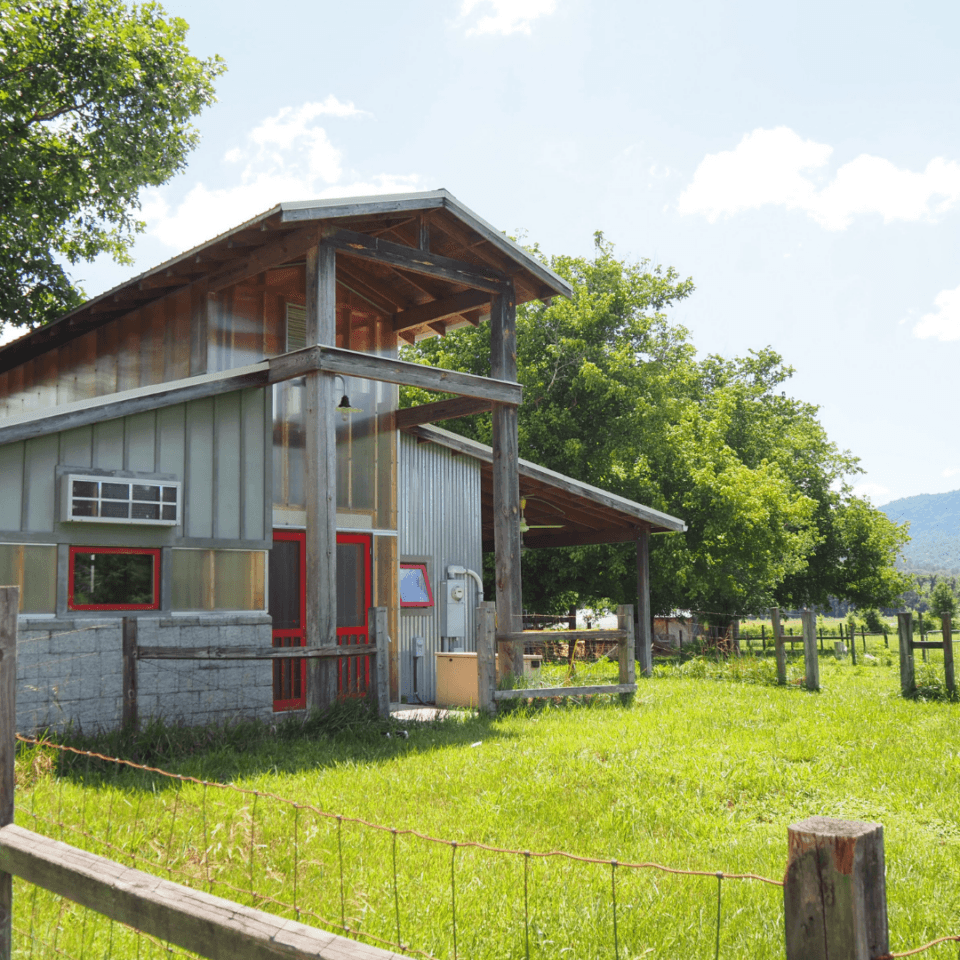
Sara: In 2020 when the whole country shut down, we came here where my parents live and started looking for land to farm. The greatest challenge was that we didn’t know what we were looking for and we didn’t have experience farming—we just had this idea and love and drive to do it. We found an incubator farm at the Patterson School Foundation through a listing on the Extension website. They offered a greenhouse, a tractor, some mentorship, and a half acre to lease. It was a great way for us to figure out what we were doing, how to farm and to start establishing our market channels. All of those challenges and failures led to what we are doing now and what we find as success. Patterson was a very important part of our chapter.
We found this land to lease right down the street. This used to be a rotationally grazed goat dairy, so the land has been very well taken care of and the top soil is absolutely gorgeous. It gave us a very fertile place to be and we have put in a lot of infrastructure. In 2023, we bought the land next door, so now we have our forever farm! It’s been a lot of work to get infrastructure built with major challenges in soil fertility, so we decided to get some goats and chickens to help with that.
Tell us about your fruit tree planting venture.
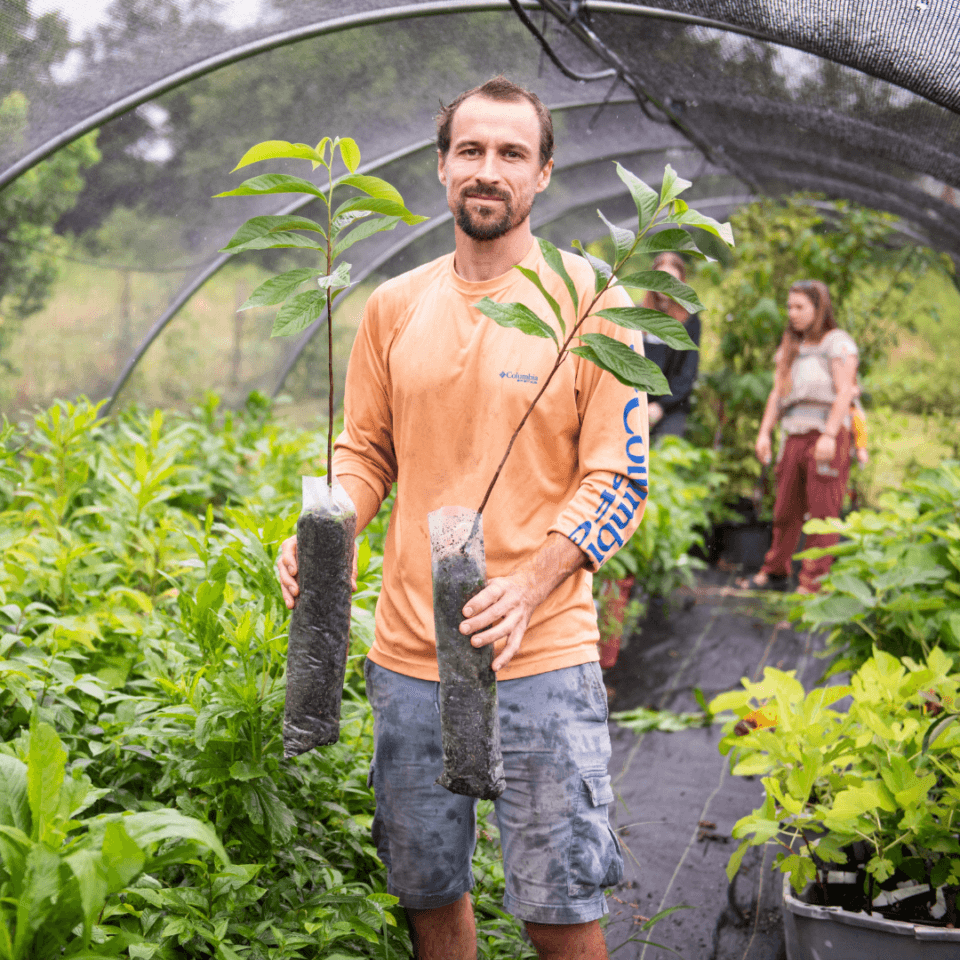
Sara: Mike’s dream that he shared with me a long time ago was that he wanted to plant 10,000 trees as a life goal.
Mike: 10,000 trees is totally going to be achieved soon. On this crazy road trip that we did, which we call the pawpaw road trip, we visited around 15 different pawpaw orchards and sampled over 50 different types of pawpaws. We saved every seed and started our own nursery from those seeds. We have learned how to graft and everything that you should about growing pawpaw fruit. Now, we are growing a lot of different varieties (25–40 different cultivars) and every year I graft a few hundred trees. Right now, we have about 400 pawpaw trees and we are learning how much they can tolerate the freezes and droughts. We are also focused on fig trees, persimmons, and all sorts of berries. We are really into the fruit and trying to figure out what can grow well here.
Where do you sell your produce and what do people love to purchase from you?
Mike: Everything changes seasonally. Every Saturday, you can find us at the Hickory Farmers Market. We also do about 15 different restaurants up in the Blowing Rock, Boone, and Grandfather Mountain area. We also do a community food box program in Asheville/Black Mountain. We are trying to figure out how to deliver to everyone and meet the demand of the different chefs we want to work with while also participating in the farmers markets every Saturday. Every season we get better at growing enough to be able to offer it to everyone.
Sara: We’ve recently had some traction with chefs in the Hickory, Marion, and Morganton area, too!
Mike: Some of our most popular would be potatoes. We do about 15 different types of potatoes, including fingerlings and roasting potatoes. Tomatoes is another one. Last year we nailed watermelons which was really exciting–we had orange, yellow, and red. We are trying to duplicate our successes and cut out the things that were epic failures every season. And always trying to grow carrots better.
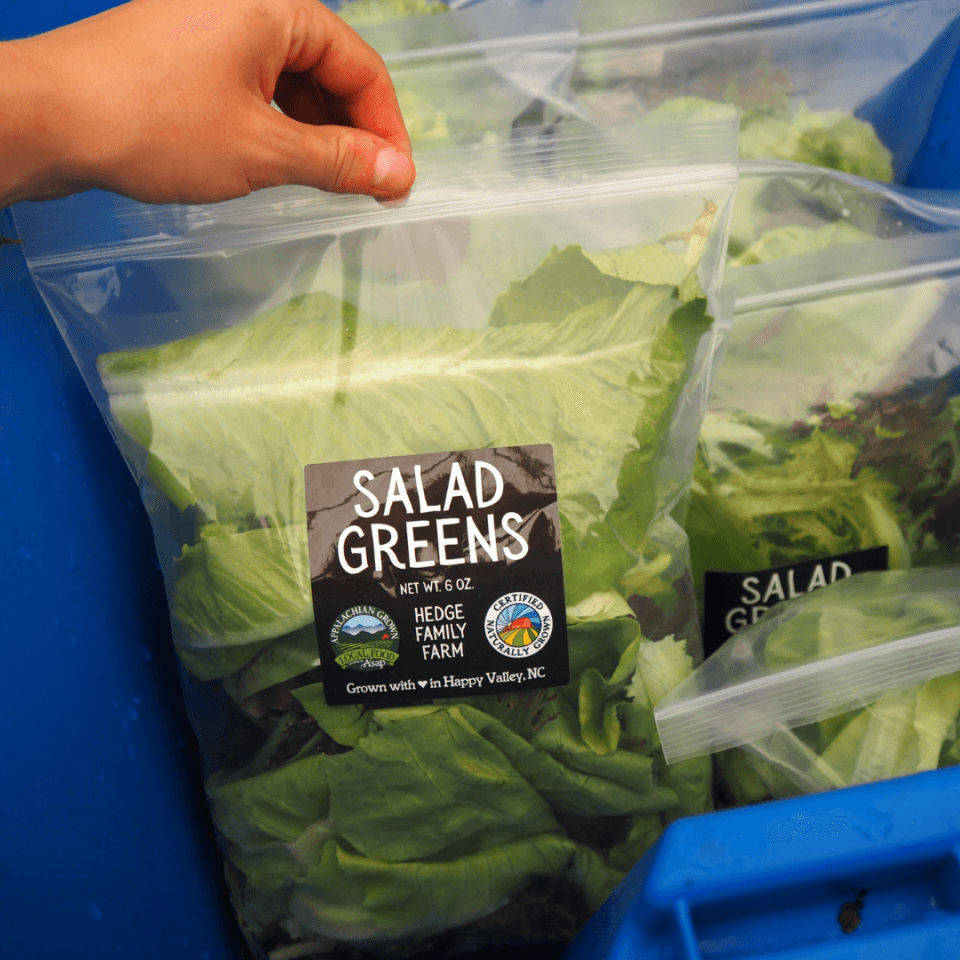
Sara: We could sell carrots every week if we had them! Carrots and baby vegetables are super popular with chefs. Salad mix is one of our biggest sellers across the board. We are really proud of our custom mix that we grow year-round and design to be flavor forward. We have a collection of seven varieties with different textures and colors.
How has ASAP been a support system for your new farm?
Mike: We get to be a part of the official Appalachian Grown region, which is great. Since 2020, we have been collaborating with ASAP and the various programs. Originally, we got a New and Beginning Farmer grant. Recently, we have been a part of the Appalachian Farms Feeding Families grant where ASAP helped us and the restaurants we work with. We are also a part of the marketing cost share, so some of our labels are paid for by that.
Sara: The Business of Farming Conference is so cool—we love going to that every year! I love that as a networking resource. We have met a lot of the people there that we work with today and have learned so much from our peer group of farmers. It has helped us establish relationships because the relationships within the farming community are just so powerful for getting through tough times or for finding information on new things—new sourcing, inputs, solutions to problems and pests, and even market channels.
What keeps you farming?
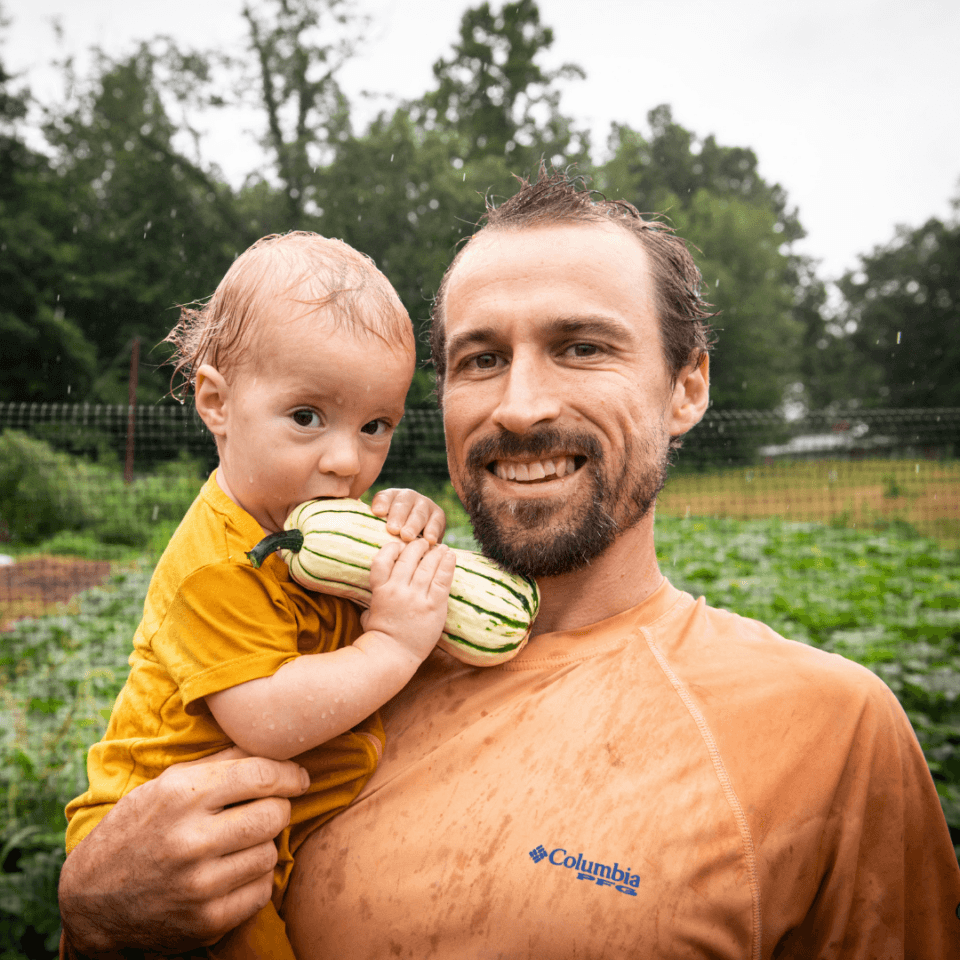
Sara: I think there will always be an ebb and flow of how much we do and take on. We do see a transition for ourselves in the future, pivoting to more fruit production or tree nursery production with our fruit trees and less on the vegetable side. But, I wouldn’t rather be doing anything else than farming and being in charge of my day. The change of vegetables through the seasons is the most exciting thing in the world—the colors, the flavors, your palette, cooking in the kitchen, the winter slowdown, all of it. That first tomato sandwich of the season! Ahh! Also, I think it’s our crazy that keeps us going. The customer feedback is maybe a byproduct of our crazy.
Mike: It’s thoroughly rewarding to roast the delicata squash that you grew and to have your purple sweet potatoes or a full tray of roasted root vegetables. Or our heirloom tomatoes on a salad. These tangible things that are so rewarding to finally achieve. Also all the people at the farmers markets and our chefs. The feedback and the love we get from our customers, friends, and chefs is so rewarding.
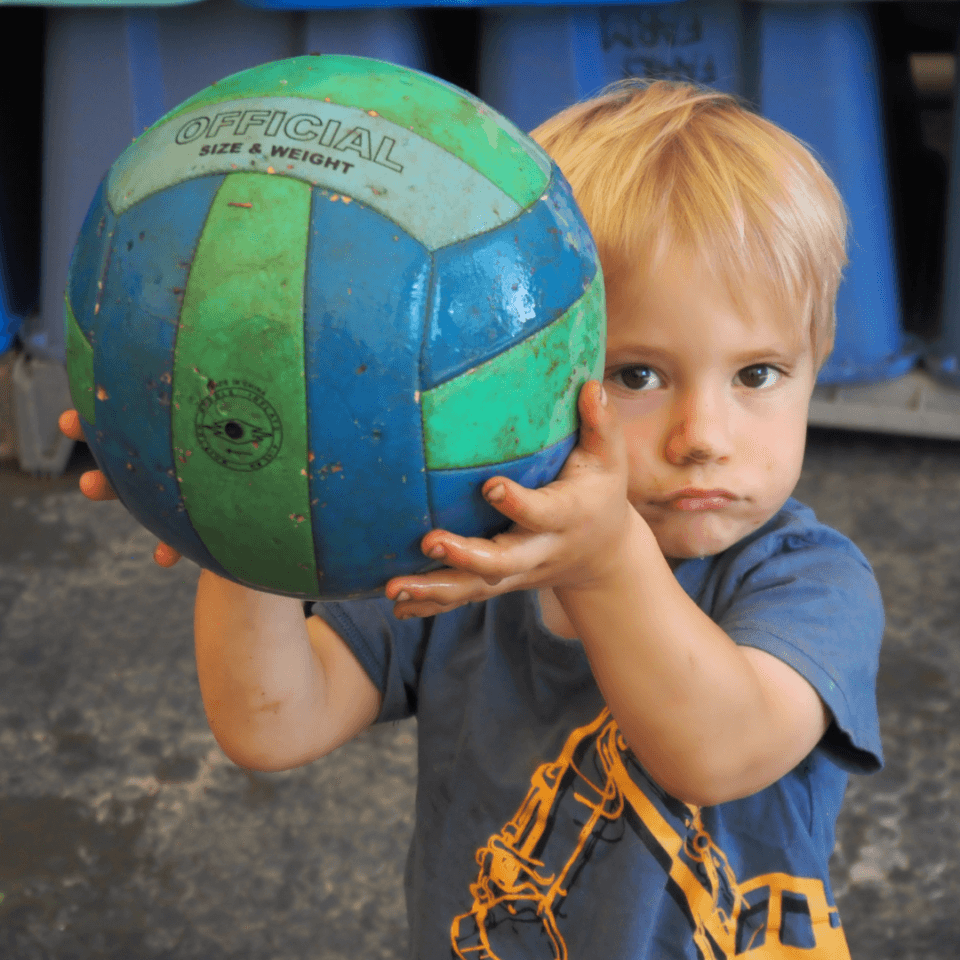
What is it like balancing farming with parenthood?
Mike: Well, there’s not much balancing. It’s basically full-time parenting and that’s our priority. We’ve wanted to do that, so that’s what we are doing. Every day is a unique balance of trying to get a hand free to get harvesting, weeding, or planting done.
Sara: Prioritization! We just can’t do everything and we’re still trying to figure out how to balance that. Sometimes it’s too hot or cold and it’s not fair to them. I’ve recently been receiving help with childcare at the farm, and that has been an easier way for us to find labor—putting me back to work. Some days, it’s just really unproductive and the kids aren’t having it and I just have to go home. It’s been a challenge, but this is a challenge we are willing to take on because this is the dream. We are living the dream with these kids here with us all day. As hard as it is, that’s how we have designed our life. The dream is also doing something with your life—with purpose—that feels good for your community, the environment, and the world that also sustains you (ikigai). Farming is that super rewarding and fulfilling thing. Raising your family on a farm that we feel proud of.