
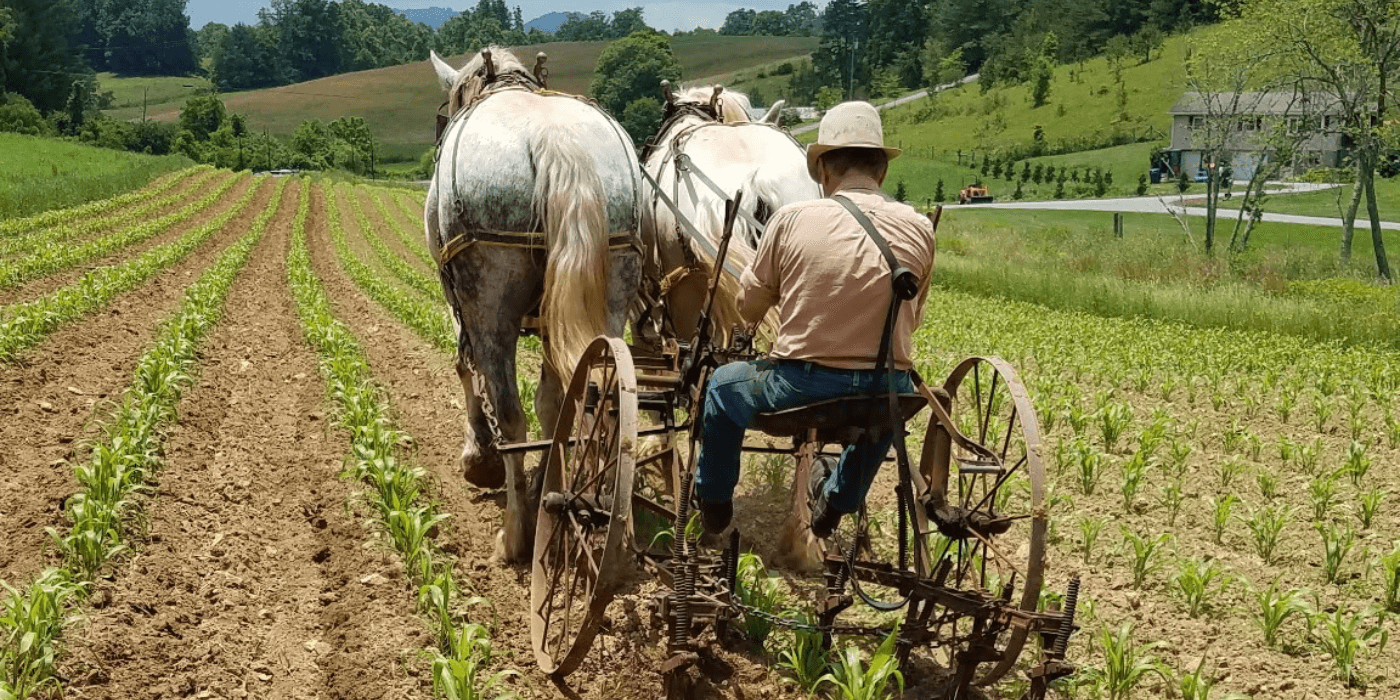
Food informs our identities—it holds our history, our present time, and our future. It’s no secret that the Southern Appalachian region has a long and rich history of traditional foods with strong ties to the land. Appalachian people are known for using what they have. Characterized by food preservation, game meat, and foraging, Appalachian food traditions were born out of geographic isolation, resourcefulness through poverty, farming ingenuity among mountain landscapes, and strong ties to community.
The spirit of Appalachia is woven into the recipes and dishes we eat today, often full of stories and passed down for generations. Southern Appalachian food heritage is a layered blend of Indigenous ecological knowledge, African American agricultural expertise, and settler farming traditions. It reflects a complex history of land and labor—of displacement and enslavement, of subsistence and commercialization. To understand Appalachian cuisine is to understand how communities have navigated isolation, industrialization, and renewal while remaining rooted in the land.
Long before European settlement, Indigenous peoples such as the Eastern Band of Cherokee Indians, stewarded the forests and river valleys of the Southern Appalachian region. They cultivated—and still do today—corn, beans, and squash, foraged for wild greens like sochan, gathered chestnuts and pawpaws, and harvested mushrooms and ramps. Their knowledge of biodiversity and seasonal cycles formed the ecological foundation of Appalachian foodways.
The Rise and Fall of Tobacco
Farming the river regions of the southern Appalachians has always been challenging. The landscape determined farming practices as much as the choices of the farmers. As European homesteads and subsistence farms expanded after the Civil War, many of them turned to the lucrative Bright Leaf and Burley tobacco. Though native to North America and historically cultivated by Indigenous peoples, tobacco expanded aggressively under commercialization. Thanks to ready markets and the ease of transport, tobacco was profitable and small mountain farms increasingly devoted more acreage to the cash crop.
Tobacco promised reliable income but required hefty inputs and dependence on external markets. When federal tobacco quotas were phasing out, many farmers faced economic uncertainty. As a 2018 report by ASAP’s Local Food Research Center described, “After more than 70 years as the dominant cash crop for farmers, production of burley tobacco had entered a period of sharp decline. Anticipating the economic and cultural impacts the loss of tobacco would have on communities, a group of farmers and citizens launched a local food campaign in 2000 to provide farmers with alternatives.” Through this project, efforts were focused on diversification and local food initiatives, helping to establish organizations like ASAP, which encouraged farmers to reconnect with local markets, schools, and regional market outlets. What began as a survival strategy became a renewed commitment to food sovereignty.
A similar arc unfolded with commercial apple production. When Gerber and juice processors established facilities in Western North Carolina in the mid-twentieth century, apple orchards expanded rapidly to meet national demand. While profitable, this system tethered growers to a few high volume buyers and reinforced monocropping. When overseas production became more profitable, processors moved out of the region. Farmers once again pivoted, diversifying crops and selling directly to local consumers. These cycles of dependence on outside markets and reclamation of mountain community illustrate how commercialized agriculture both disrupted and inadvertently catalyzed a return to regional food systems.
Localizing Food Systems & Reclaiming Heritage Foods
Throughout these shifts, traditional crops and foraged foods have endured despite industrialization and expanded development. The pawpaw, known as North America’s largest native fruit, ripens briefly in late summer among shaded riverbanks and forested understory. With its custard-like texture and tropical flavor, it defies expectations of what mountain fruit should taste like. Pawpaws rarely appear in supermarkets as their delicate skins bruise easily and they spoil quickly. For generations, families have simply walked into the woods to gather them.
Since 2008, Seth and Sharon Dubuc have been growing an impressive pawpaw orchard on their farm, Black Thorn Farm and Kitchen, in the Sandy Mush area of Leicester, North Carolina. When they started their farm in 2008, they wanted to raise foods that reflect the geography and microclimates of the region—and cue pawpaws! “When guests visit our farm from all over the United States,” shares Sharon, “we often introduce them to pawpaws because they’ve either never heard of them or have never found any to try. They have a kind of lore attached to them but here, to us, they’re just easy to grow and super productive!” Because of their creamy texture, Seth and Sharon love to use pawpaws in lassis, smoothies, ice cream, and puddings.
Sorghum tells another story of adaptation and communal labor. Introduced to the region from Africa in the nineteenth century and cultivated extensively by Black farmers throughout the south, sorghum thrived in Appalachian soils. Because sugar cane didn’t grow as well in the mountains and refined sugar was very expensive to acquire, sorghum was an accessible sweetener for mountain people before widespread sugar availability. It flavored biscuits, baked beans, and preserves and is known to contain high amounts of potassium and iron.
Growing sorghum required patience and processing it required community. In the fall, neighbors gather to strip leaves, press stalks through horse-or-mule-powered mills, and boil the bright green juice in long pans, from sun up to sun down, “skimming” off the impurities until it thickens into amber syrup. “It used to be that every community had a sorghum processor. You’d store your sorghum cane and wait for them to make their way to you,” shares Alvin Lytle of Cove Creek Nursery Farm in Old Fort, North Carolina.
Sorghum boils were social events—days of shared work paired with storytelling and bluegrass music. The old ways emphasized cooperation over efficiency, embedding food production within relationships. David Burnette of Burnette Family Farm in Canton, North Carolina, invites the public to the farm every September for their big sorghum boil: “People plan vacations around the sorghum harvest. The community comes and brings a covered dish or instrument for making music. A lot of people used to bring their grandparents who remembered making it years ago. It makes a good community gathering.”
David’s family, including his wife, Diane, and his son, Jimmy, have been growing sweet sorghum and making syrup since 1985. As a former tobacco farm, the Burnette’s turned to sorghum when subsidies faded away. They have kept traditions alive by using both old ways and new for planting, cultivating, harvesting, and processing sorghum using horse power and a trailer drawn mill. These days, sorghum isn’t commonly grown, but if you drive around the countryside “you can still see the homemade sheds that people used to store their sorghum cane,” shares Jimmy.
Pig raising, too, emerged from necessity. In steep terrain without swaths of farmable land, most families had room to keep a hog for the winter. Unlike cattle, pigs don’t need much acreage. Back in the day, pigs were the primary source of animal protein outside of wild game. Families raised a few animals through the year, feeding them kitchen scraps and foraged mast. Much like sorghum, communities relied on their family and neighbors to help butcher and cure meat to last them through the year.
Since Craig Taffaro started his Columbus, North Carolina-based farm, Melvin Hill Meats, in 2022, he has been raising American Guinea Hogs. He chose them not only because they are the quintessential Southern Appalachian pig, but because out of all the hogs he has raised, Craig believes that these taste the best: “I love being part of the history of our place by carrying on the legacy of these amazing little pigs. The ease of preserving pork compared to ruminants or chicken, at least preserving it into something super tasty like country ham, you have a perfect recipe for rich social traditions.”
Craig agrees that from nose to tail, none of the pig went to waste back then: hams were cured, fat rendered into lard, scraps transformed into sausage. “The family or community event that culminated months or years of care,” shares Craig, “resulted in a full larder and smokehouse.” As a farmer, Craig is not shy or insensitive to the sacrifice it takes to raise animals for food and he takes this shared responsibility of sustaining the lives of his neighbors seriously.
Today, Appalachian foodways are neither static nor merely nostalgic. Preserving these foods means preserving truth—the full, complicated history of the land and labor that produced them. It means seeking out local farms, learning to cook with sorghum, foraging for pawpaws in season, and teaching younger generations why these practices matter. The future of Appalachian cuisine lives in its fields, recipes, and kitchens and how we pass these foods and their stories onto the next generation.
Find pawpaws, sorghum, and pork, along with other Southern Appalachian heritage foods, on thoughtfully curated restaurant menus, at bustling farmers markets, and directly from the farm. Search for products, farms, farmers markets, and restaurant partners at appalachiangrown.org.