
It’s no secret that Asheville and the surrounding Blue Ridge Mountain region draws visitors from all over. Travelers flock for the sweeping mountain views, vibrant food culture, and the opportunity to slow down and experience the landscape in a deeper way. Visiting farms, whether from out of town or in one’s own backyard, has become one of the most meaningful ways to take in that scenery while experiencing a true taste of place.
Across Southern Appalachia, farms welcome visitors to wander through apple orchards, pick strawberries straight from the field, taste the grape harvest in handcrafted wines, or gather bouquets in colorful flower patches. Children feed goats through wooden fences, families take tractor rides through orchards, and visitors leave with bags of farm goods raised just yards away. For many farmers, these moments are more than an average day on the farm—they are part of a vital economic lifeline known as agritourism.
Agritourism, much like traditional tourism, is an important part of the agricultural economy. Farms that welcome visitors know that agritourism goes beyond simple transactions. When guests pick their own strawberries or apples, meet farm animals, pick their own flowers, or stay overnight in scenic on-farm lodging, they gain a deeper connection to the land and the people who grow and raise their food. For farmers, these visits help diversify income and build relationships with the communities they serve. Those relationships often lead visitors to support farms long after their visit by purchasing their products at farmers markets, grocery stores, farm stands, or online.
More than a third of farms in ASAP’s Appalachian Grown (AG) network participate in agritourism, including pick-your-own operations and farm tours. For farms responding to ASAP’s 2025 Appalachian Grown Producer Survey, agritourism accounts for about 27 percent of overall sales, though some farms earn nearly all their income solely through visitor experiences.
For some farms, opening their gates to visitors is about more than economics. Oakley Brewer, coordinator for ASAP’s annual Farm Tour, says many farmers see agritourism as a chance to tell their story. “Some farms that are part of ASAP’s Farm Tour, that’s the only time they’re ever open to the public because they don’t have the time or staffing to do it every weekend,” they explain. “But they see the value of connecting with the community, sharing the story of their farm, and helping build those lasting relationships.”
Helene Interruption
In September 2024, at the height of the fall tourism season, Hurricane Helene disrupted that connection between farms and visitors. The storm brought devastating flooding, landslides, and infrastructure damage throughout Southern Appalachia. For farms that rely on agritourism during peak visitor months, the impacts were immediate. Fields were damaged, crops destroyed, and roads to farms became impassable just as thousands of families typically arrive for apple picking and fall festivals. In the months since, farmers across the region have been rebuilding, not only their land, but the relationships and visitor experiences that sustain their businesses.
The storm exposed vulnerabilities in the agricultural safety net. In ASAP’s Helene Impact Report, available at asapconnections.org/research, some farms reported losing fields entirely to flooding. One farmer shared that two acres of land they had spent 15 years building topsoil on was reduced to “a field of rocks and craters.” For agritourism farms, the damage was often financial rather than structural, which meant that many did not qualify for disaster assistance. “We would like to see agritourism covered in agriculture disaster programs, as it currently is not,” one surveyed farm reported. Even farms that escaped physical damage faced a steep drop in visitors as travel restrictions and recovery efforts slowed tourism throughout the region.
For farms like Stepp’s Hillcrest Orchard in Hendersonville, North Carolina, agritourism is central to their identity. Apple season, from August through October, is their busiest time of year, when families flock to the orchard for pick-your-own apples, tractor rides, tasty farm store goods, and creating core on-farm memories. “Agritourism is what we do—it’s what we are all about,” Rita Stepp shares. “We are agriculture, we are farmers, we grow things and we work year-round as farmers, but we also invite visitors to come to our farm. We think it is so important for people to see where their food comes from, how it grows, and the work it takes.”
Although Stepp’s lost only a few apple trees, the storm washed out the road leading to the farm, cutting off access during the busiest time of the year. “We had to close for four weeks in October, which is our busiest time of the year,” Rita said. “It was very painful and greatly impacted our revenue.”
Across the mountains in Spruce Pine, an area particularly impacted by Helene, The Orchard at Altapass faced even greater losses. Home to nearly 3,000 heirloom apple trees, the orchard sits high on a south-facing mountainside along the Blue Ridge Parkway and a core community center for not only apples and farm goods, but Appalachian bluegrass heritage. When Helene’s winds and rain hit from the south, the impact was devastating. Saturated soil caused trees to topple, landslides blocked access roads, and parts of the orchard’s infrastructure were scattered by the storm. “There was no access to the orchard from any direction,” staff shared in a social media post. In total, the orchard lost nearly 500 apple trees, many of those over 80 years old. They had no choice but to close for the remainder of the 2024 season.
Resilience in Community
Yet community support quickly followed. Volunteers cleared debris, generous community members and organizations helped fund repairs, and neighbors showed up to help restore these beloved farms. Despite the losses, both Stepp’s Hillcrest Orchard and The Orchard at Altapass reopened in 2025 to welcome visitors, celebrate rebuilding efforts, and ensure their farms can continue to provide meaningful on-farm experiences. Stepp’s Hillcrest even held a corn maze fundraiser, the maze spelling WNC Farms, to help raise funds for ASAP’s Farm Resiliency fund that provides critical emergency funding for farms facing natural disasters.
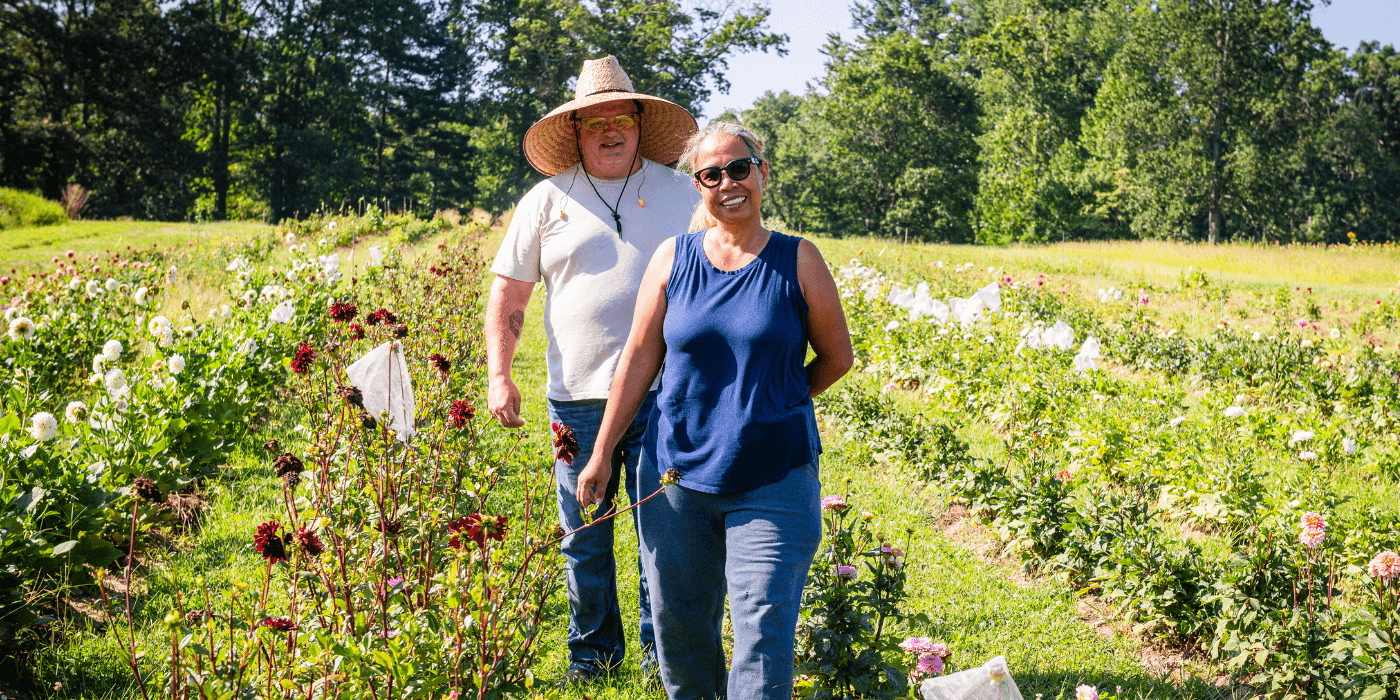
One of those farms who received support through ASAP’s resiliency fund is Broom’s Blooms, a u-pick flower farm in Hendersonville, North Carolina. Helene struck just as Karen and John Broom were expanding their agritourism offerings. Their flower field was washed out and flattened by wind and rain and plastic ripped off their greenhouse where they start all their plants. They too, were forced to end their season early.
With agritourism as their farm’s primary source of income, these setbacks didn’t stop their efforts to build a beautiful and welcoming space. “We expanded our u-pick area,” shares Karen. “Last year, we were able to build a shed with recovery and disaster relief grants. This year, we plan to add a concrete pad and insulation so that we have a bigger farmstand open to the public.”
In 2025, Broom’s Blooms participated in ASAP’s Farm Tour, an annual event that welcomes thousands of visitors to farms across Western North Carolina. Karen loves having visitors out at the farm. She explains that, “agritourism helps people enjoy nature and the beauty of flowers, and to get to know farms in the area better…[it also] motivates us to expand and make improvements on our farm.”
Other farms found resilience in the community, too. At The Ten Acre Garden, a small u-pick farm in Canton, North Carolina, agritourism is essential to their business model. “Since we are a u-pick farm, we are heavily reliant on agritourism,” shares farm owner Morgan Davies. “If we aren’t having people coming to pick, we are relying on people coming out to the farm.” At The Ten Acre Garden, guests can shop at their farm store, pick their own asparagus, strawberries, or blackberries, and enjoy other on-farm activities like farm-to-oven pizza nights and live music among colorful picnic tables and breathtaking views.
Through Helene, the farm lost their entire strawberry patch to flooding. When the Davies put out a call for support, the community responded swiftly. “With donated funds and workdays, we got it replanted and folks were so grateful to have a place they could still come and feel a little more normal. It was truly community supported.” This spring, visitors can return to the farm to pick their own strawberries. The Ten Acre Garden was also a part of ASAP’s 2025 Farm Tour. One attendee shared in a survey that they loved visiting The Ten Acre Garden: “There were so many activities, I could have spent the whole day there!”
This is one of the reasons why visiting farms across the region is as important as ever. Each visit, whether it’s picking apples, cutting flowers, or simply stopping by a farm stand, helps sustain local farms and strengthens the agricultural economy that defines so much of life in the mountains. Agritourism has always been about more than revenue. It builds relationships between farmers and their communities, creating a network of support that becomes especially important during difficult times, inviting those visitors to become a part of a farm’s story. And after Hurricane Helene, those connections have proven just as important as the crops themselves.
For those looking to explore farms across the region, there are countless opportunities awaiting. Search for farms with agritourism offerings like u-pick, farm stores, lodging, wineries, and more in ASAP’s online Local Food Guide at appalachiangrown.org.