
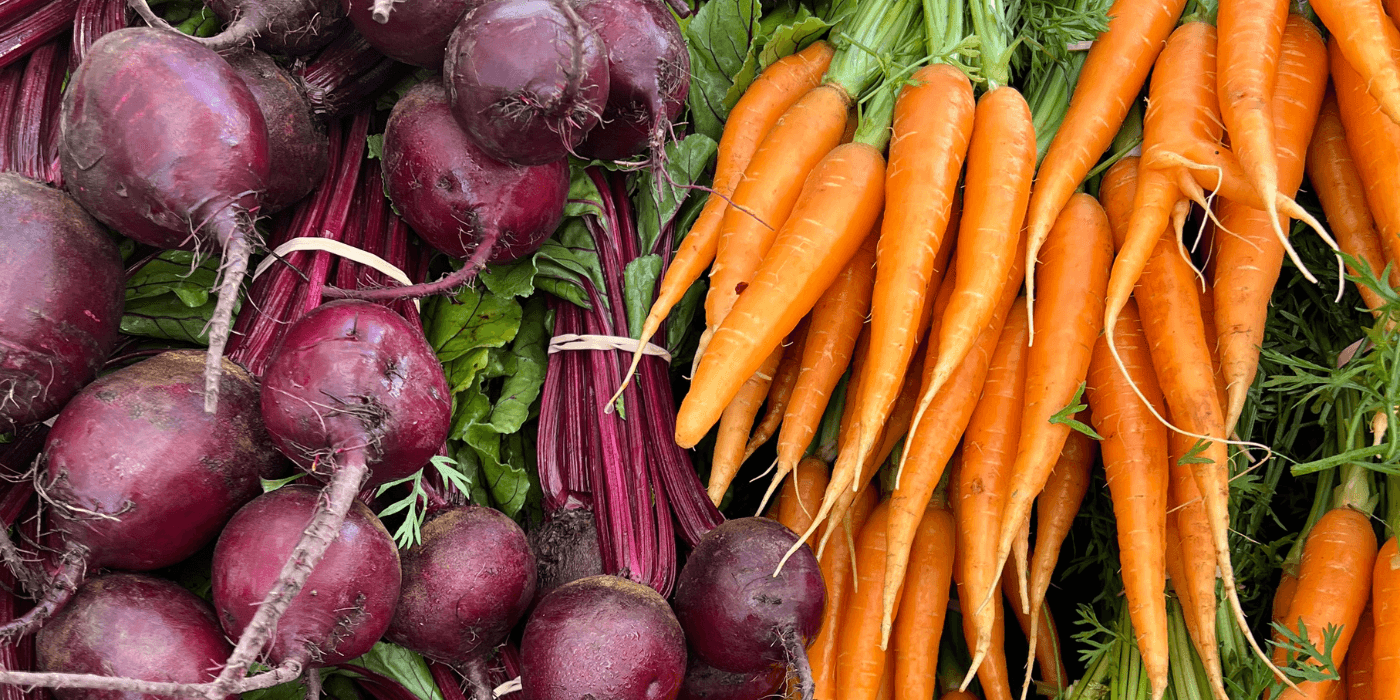
Beets might not be a favorite for everyone, but they sure taste like something ancient rising from the earth. The first beets were actually sea beets growing along the coastal regions of the Mediterranean. Egyptians, Greeks, and Romans first cultivated the sea beet for its leafy greens–think something like Swiss chard.
Nowadays, table beets come in many colors and varieties, including golden, white, and the gorgeous pink and white striped Chioggia. As a prominent bright pink and red food, beets are known to be incredibly heart healthy and good for relaxing blood vessels, increasing blood flow, and reducing inflammation.
In hot climates where the beet originated, chilled dishes are a welcomed and cooling delight, making them a perfect addition to a mezze platter. And after the week of heat we have had, a mezze platter might be right up your alley! Mezze is a Mediterranean and Middle Eastern spread of small, vibrant dishes including dips, finger foods, and bread–think hummus, fresh and pickled vegetables, dolmas, olives, and warm pita. Similar to Spanish tapas, mezze is meant to be sharable and can act as an appetizer. Culturally, a mezze board is quite the social experience!
Incorporating beets into your meals doesn’t have to be scary. Roasting or steaming beets helps increase their sweetness and reduce their earthy flavor. Find beets from Tiny Bridge Farm (Asheville City and West Asheville markets), Ivy Creek Family Farm (North Asheville and Weaverville markets), Wild East Farm (Black Mountain, North Asheville, and River Arts District markets), and Smallholding Farm (East Asheville Tailgate Market).
Try out this simple Moroccan roasted beet salad. Start by washing three medium beets and dicing them into bite size pieces. Since you’re not eating them raw, you can leave the skin on for extra fiber. Toss the diced beets in olive oil, salt, and pepper before roasting them in the oven at 375 degrees for 30 to 40 minutes, or until tender with a fork. If it’s too hot in your home for the oven, you can also use an air fryer at 380 degrees for about 20 minutes. Once cooked, remove and let cool. Make your dressing by mixing one tablespoon of olive oil, zest of one lemon, one tablespoon of lemon juice, one clove of minced garlic, a half teaspoon of cumin, two tablespoons of roughly chopped parsley, and more salt and pepper to taste. In a mixing bowl, add your cooled beets and pour on the dressing, stirring until the beets are well coated. Double this recipe if you want to meal prep and save some for later!
You can also turn beets into a bright yogurt dip! If you make the recipe above, roast some extra beets and keep about a cup to the side. Mash or grate the cooked beets and place them in a bowl. Add two cups of yogurt, along with a teaspoon of salt and one clove of minced garlic. Stir well and refrigerate for 30 minutes before serving. Top with chopped parsley and walnuts. Add this to your mezze platter or enjoy with fresh cucumber slices.
Look for other mezze platter items at markets, including cucumbers, radishes, carrots, and the first cherries from McConnell farms (North Asheville Tailgate Market). Find labneh, a soft and creamy Middle Eastern style cheese, along with sheep milk yogurt from Grassroots Farm & Dairy at North Asheville and River Arts District markets. Hominy Farm (North Asheville and River Arts District markets) has you covered with sweet and savory vegan man’oushe, a Lebanese flatbread with a variety of locally-sourced toppings and find pita bread from Hominy at River Arts District Market only. Incorporate pickled and fermented vegetables from Stump Farms (Asheville City Market) and Serotonin Ferments (North Asheville, West Asheville, and River Arts District markets).
At spring markets, find a variety of produce including leeks, collards, cabbage, broccoli, lettuces, mixed greens, Asian greens, turnips, radishes, beets, parsnips, carrots, and more. You’ll also find farm-fresh eggs, cheese, bread, pastries, fermented products, drinks, and prepared foods. As always, you can find information about farms, tailgate markets, and farm stands, including locations and hours, by visiting ASAP’s online Local Food Guide at appalachiangrown.org.